




Nature's Carbon Capture Mechanism: What Is a Carbon Sink?
Table of Contents
- 1.What Is a Carbon Sink?
- 2.How Do Carbon Sinks Work?
- 3.What Are the Largest Natural Carbon Sinks?
- 4.Afforestation, Reforestation & Carbon Sinks
- 5.How Do Carbon Sinks Help Address Climate Change?
- 6.How Can Carbon Sink Capacity Be Increased?
- 7.Are There Human-Made Carbon Sinks?
- 8.The Future of Carbon Sinks
A key concept in the fight against the climate crisis, a carbon sink refers to a natural or human-made system that absorbs carbon dioxide (CO₂) from the atmosphere and helps regulate the planet's temperature balance.
Forests, oceans, soils, wetlands, and certain carbon capture technologies all function as carbon sinks, helping maintain the natural carbon cycle.
So, how do carbon sinks work? Why are they so important? And what role do they play in reducing our carbon footprint?
Here are the most frequently asked questions about carbon sinks and their answers.
1. What Is a Carbon Sink?
A carbon sink is a natural or human-made system that absorbs and stores carbon from the atmosphere.
Carbon sinks play a critical role in maintaining the planet's carbon balance and addressing climate change.
Natural carbon sinks include:
- forests,
- soils,
- oceans,
- peatlands,
- wetlands.
Human-made carbon sinks include technologies designed to capture and store carbon dioxide.
2. How Do Carbon Sinks Work?
Carbon sinks remove carbon dioxide from the atmosphere through processes such as photosynthesis, chemical reactions, and physical absorption.
Forests, for example, absorb CO₂ through photosynthesis and store carbon in trees, roots, and soil while releasing oxygen.
Oceans absorb CO₂ at the surface, where it dissolves in seawater and may be used by marine organisms or transported into deeper layers of the ocean.
Soils store carbon through organic matter, plant roots, and the activity of microorganisms.
The effectiveness of a carbon sink depends on how much carbon it absorbs and how long that carbon remains stored.
3. What Are the Largest Natural Carbon Sinks?
The world's largest natural carbon sinks include:
Forests
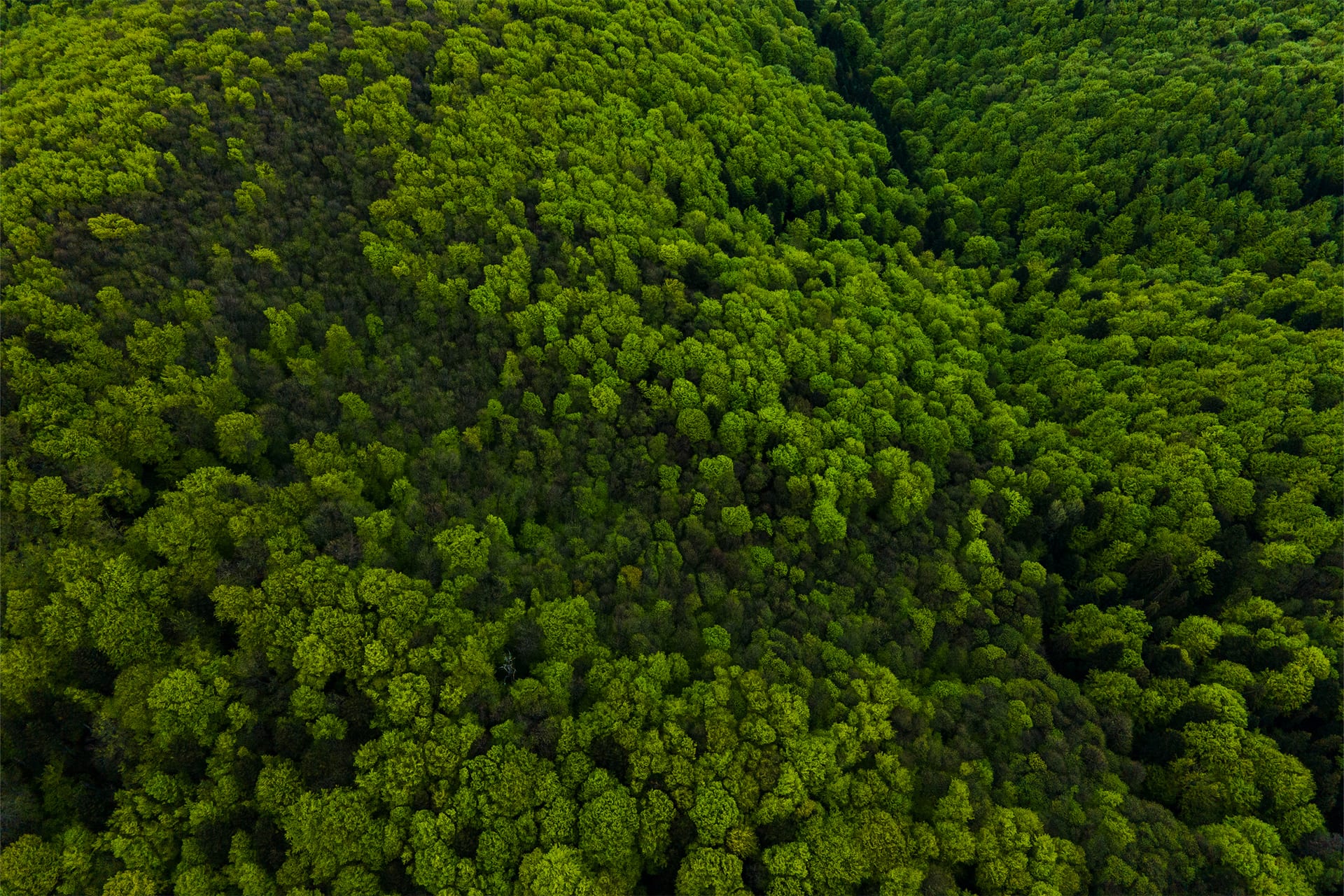
Forests absorb carbon dioxide through photosynthesis and store it in trees, vegetation, roots, and soil.
Tropical rainforests are particularly important because of their extensive biomass, although boreal and temperate forests also store significant amounts of carbon.
Oceans
Oceans are among the largest components of the global carbon cycle. They absorb a substantial share of the carbon dioxide released into the atmosphere by human activities.
Carbon is stored in surface waters, marine organisms, sediments, and deeper ocean layers.
Soils
Soils can store carbon for long periods through the accumulation of organic matter and the activity of plants and microorganisms.
Healthy soils are therefore essential both for climate regulation and ecosystem resilience.
Peatlands and Mangrove Forests
Peatlands and mangrove forests are highly effective carbon-rich ecosystems.
They can store carbon for hundreds or even thousands of years, particularly when they remain intact and undisturbed.
Despite covering relatively small areas, these ecosystems can contain exceptionally high levels of stored carbon.
4. The Relationship Between Afforestation, Reforestation, and Carbon Sinks
Afforestation and reforestation are among the most effective ways to expand and strengthen natural carbon sinks.
Trees absorb atmospheric CO₂ through photosynthesis and store carbon in their trunks, branches, roots, leaves, and surrounding soils.
The larger, healthier, and more resilient a forest ecosystem becomes, the greater its potential to capture and store carbon over time.
Creating new forest areas, restoring degraded landscapes, supporting natural regeneration, and protecting existing forests can all contribute to increasing carbon sequestration capacity.
Native forest tree species such as Anatolian black pine (Pinus nigra) and Turkish red pine (Pinus brutia) are especially important in Türkiye due to their broad natural distribution and ecological role in sustaining forest ecosystems.

At ecording, we use unmanned aerial vehicle technology to support ecosystem restoration and reforestation in areas where intervention is needed.
Through ecoDrone, we deliver seeds and seed balls to hard-to-reach and degraded landscapes, supporting the recovery and expansion of forest ecosystems while contributing to long-term carbon sequestration.
5. How Do Carbon Sinks Help Address Climate Change?
Carbon sinks help slow global warming by removing CO₂ from the atmosphere and storing it in natural or engineered systems.
The increasing concentration of greenhouse gases, driven largely by fossil fuel use, land-use change, and deforestation, is one of the primary causes of rising global temperatures.
Natural carbon sinks help limit the effects of climate change in several ways:
Oceans
Oceans absorb and store large amounts of atmospheric CO₂.
However, excessive carbon absorption can contribute to ocean acidification, which threatens marine organisms and ecosystems.
Forests
Forests store substantial amounts of carbon over long periods and play a major role in climate regulation.
When forests are destroyed or degraded, much of the carbon stored in trees and soils may be released back into the atmosphere.
Soils
Soils store carbon through organic matter and plant growth.
Intensive agriculture, soil erosion, deforestation, and poorly planned urban development can reduce this storage capacity and cause stored carbon to be released.
Protecting existing carbon sinks and increasing their capacity can help stabilize atmospheric carbon levels and limit temperature rise.
However, carbon sinks cannot replace the need to reduce greenhouse gas emissions at their source. Both emission reductions and ecosystem protection are essential to effective climate action.

6. How Can Carbon Sink Capacity Be Increased?
There are several ways to protect and expand carbon sink capacity.
Restoring and Rehabilitating Forest Ecosystems
Creating new forested areas, restoring degraded land, supporting natural regeneration, and protecting existing forests can increase long-term carbon storage.
Restoration efforts should be based on local ecological conditions and prioritize native species, biodiversity, and ecosystem resilience.
Improving Soil Management and Agricultural Practices
Sustainable agricultural practices can help preserve soil carbon and improve the ability of agricultural land to function as a carbon sink.
Methods may include:
- reduced soil disturbance,
- cover cropping,
- crop rotation,
- agroforestry,
- improved organic matter management.
Protecting Coastal and Marine Ecosystems
Protecting mangroves, salt marshes, seagrass meadows, and other coastal ecosystems can strengthen ocean-based carbon storage.
These ecosystems, often referred to as blue carbon ecosystems, also provide important benefits for biodiversity, coastal protection, and climate resilience.
Prioritizing Green Spaces in Urban Planning
Increasing urban forests, parks, green corridors, and other vegetated areas can help capture carbon while also reducing heat stress, supporting biodiversity, and improving quality of life in cities.
Transitioning to Sustainable Energy
Reducing dependence on fossil fuels lowers the amount of carbon dioxide released into the atmosphere.
This helps prevent natural carbon sinks from becoming overwhelmed and supports a more balanced global carbon cycle.
7. Are There Human-Made Carbon Sinks?
Yes. Scientists and engineers are developing a range of technologies to capture and store excess carbon dioxide.
These solutions aim to reduce the amount of CO₂ entering or remaining in the atmosphere.
Prominent examples include:
Carbon Capture and Storage
Carbon capture and storage, commonly known as CCS, involves capturing CO₂ from industrial facilities or power plants and transporting it for long-term storage underground.
Direct Air Capture
Direct air capture, or DAC, uses chemical processes to remove CO₂ directly from ambient air.
The captured carbon can then be stored underground or used in certain industrial applications.
Biological and Engineered Carbon Storage
Researchers are also exploring biological approaches involving plants, algae, microorganisms, and bio-based materials that may increase carbon uptake or extend the duration of carbon storage.
Other approaches include biochar and mineral-based carbon storage.
However, many human-made carbon removal technologies still face challenges related to cost, energy use, scalability, and long-term storage.
When used alongside rapid emissions reductions and the protection of natural ecosystems, they may contribute to a broader climate strategy.
8. What Does the Future of Carbon Sinks Look Like?
Carbon sinks will remain central to global efforts to address the climate crisis.
However, deforestation, ecosystem degradation, soil loss, wildfires, rising temperatures, and ocean acidification are weakening the capacity of many natural systems to absorb and store carbon.
For this reason, nature-based solutions and sustainability-focused policies will become increasingly important in the years ahead.
Protecting existing ecosystems, restoring degraded landscapes, improving land management, and reducing greenhouse gas emissions must all progress together.
Carbon sinks are a vital part of climate action, but their effectiveness depends on the health, resilience, and long-term protection of the ecosystems that sustain them.
To become an ecording partner, contact us today.