




COP28 in Five Key Takeaways: A Turning Point Away from Fossil Fuels?
Table of Contents
The 28th United Nations Climate Change Conference (COP28) took place in Dubai from 30 November to 12 December 2023, bringing together governments, businesses, scientists, and civil society to accelerate global climate action and advance the goals of the Paris Agreement.
Officially known as the Conference of the Parties (COP), the annual summit is organized under the United Nations Framework Convention on Climate Change (UNFCCC) and brings together nearly every country in the world to negotiate climate policy.
For a broader introduction to the conference, explore our article: COP28: What Is COP and Can It Help Address the Climate Crisis?
COP28 attracted significant attention before it even began. The conference was chaired by Sultan Al Jaber, CEO of the Abu Dhabi National Oil Company (ADNOC), making his appointment one of the most debated aspects of the summit.
Many climate advocates questioned whether meaningful progress could emerge from a conference led by the head of one of the world's largest fossil fuel producers.
So, after two weeks of negotiations, did COP28 offer hope—or disappointment?
Here are five of the summit's most significant outcomes.
A Historic Commitment to Transition Away from Fossil Fuels
Perhaps the most closely watched outcome of COP28 was the agreement recognizing the need to transition away from fossil fuels in energy systems.
For the first time in nearly three decades of COP negotiations, the final agreement explicitly referenced fossil fuels.
While many countries and climate organizations welcomed this milestone, the wording also generated criticism.
Rather than calling for a phase-out of fossil fuels, the agreement uses the phrase "transitioning away from fossil fuels."
Critics argued that the language does not establish:
- a clear timeline,
- legally binding commitments,
- mandatory reductions in coal, oil, or natural gas production.
As a result, governments retain significant flexibility regarding how they interpret and implement the agreement.
Alongside this decision:
- 118 countries pledged to triple global renewable energy capacity by 2030.
- The same countries also committed to doubling the annual rate of energy efficiency improvements by 2030.
- The United States, Czech Republic, Cyprus, Dominican Republic, Iceland, Kosovo, and Norway joined the Powering Past Coal Alliance, increasing its membership to 57 countries.
However, major emitters including China and India did not join the renewable energy pledge.
Türkiye also did not join either the renewable energy commitment or the Powering Past Coal Alliance during COP28.
New Commitments for Nuclear Energy and Oil & Gas Decarbonization
COP28 also produced significant announcements regarding the future of energy systems.
More than 50 oil and gas companies representing a substantial share of global production signed the Oil & Gas Decarbonization Charter (OGDC).
The signatories committed to:
- working toward net-zero operations by 2050,
- eliminating routine flaring by 2030,
- reducing methane emissions.
In parallel, the United States led the launch of the Declaration to Triple Nuclear Energy, reflecting the view that nuclear power could play an important role in achieving global net-zero goals.
Twenty-two countries signed the declaration, committing to work toward tripling global nuclear energy capacity by 2050.
Signatories included:
- United States
- United Arab Emirates
- United Kingdom
- Canada
- France
- Japan
- South Korea
- Sweden
- Finland
- Poland
- Romania
- Ukraine
along with several other participating countries.
The First Global Stocktake Calls for Stronger Climate Action

One of the most important outcomes of COP28 was the conclusion of the first Global Stocktake (GST) under the Paris Agreement.
The Global Stocktake is conducted every five years to evaluate collective progress toward international climate goals and identify where additional action is required.
The COP28 Global Stocktake concluded that countries should:
- triple renewable energy capacity by 2030,
- double the annual rate of energy efficiency improvements,
- accelerate the phase-down of unabated coal power,
- reduce inefficient fossil fuel subsidies.
The process also called on countries to submit updated Nationally Determined Contributions (NDCs) by 2025.
These updated climate plans are expected to be more ambitious and better aligned with pathways that limit global warming to 1.5°C, as outlined by the Intergovernmental Panel on Climate Change (IPCC).
The Global Stocktake is intended to strengthen transparency, accountability, and international cooperation while encouraging countries to continuously improve their climate commitments.
Agreement Reached on the Loss and Damage Fund
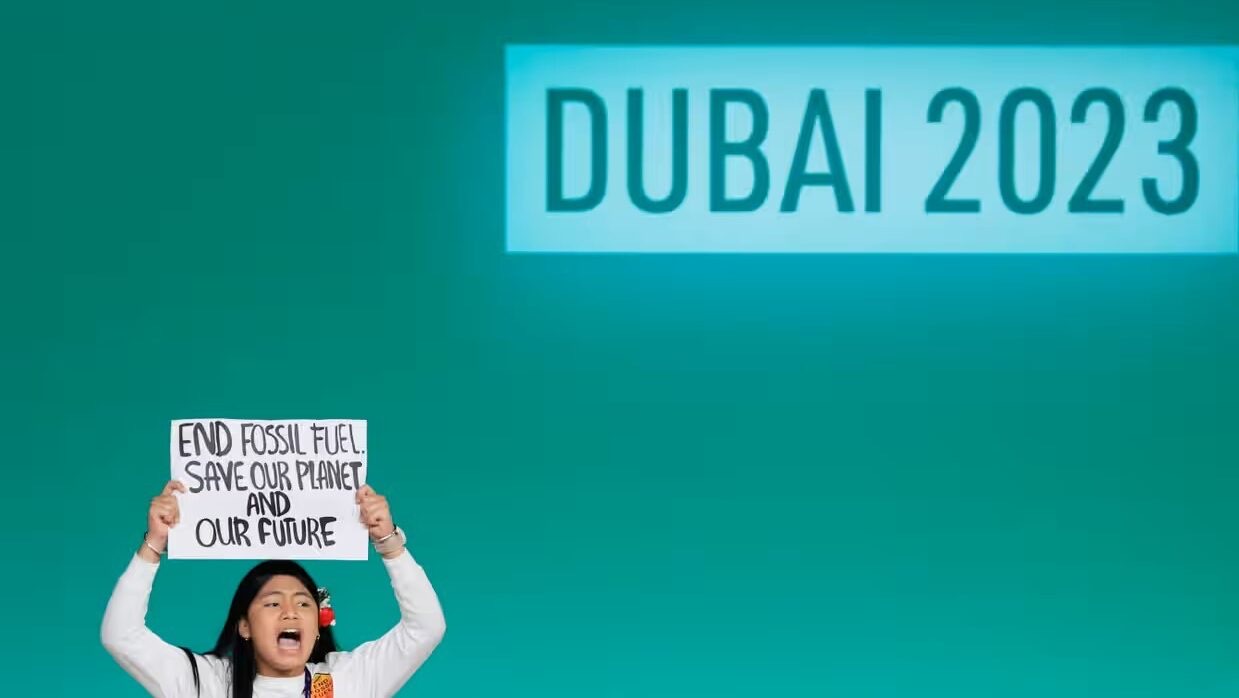
Climate finance was another major topic during COP28.
On the conference's opening day, countries reached an agreement to operationalize the Loss and Damage Fund, which had first been established during COP27.
The fund is designed to support developing countries facing the increasing impacts of climate change, including:
- floods,
- droughts,
- rising sea levels,
- extreme weather events,
- climate-related disasters.
During COP28, Türkiye's delegation argued that the country should also be eligible to benefit from the Loss and Damage Fund.
At the conference, the European Union and 15 countries collectively pledged approximately US$655 million to the fund.
Among the announced contributions were:
- United Arab Emirates: US$100 million
- Germany: US$100 million
- United Kingdom: £40 million
- United States: US$17.5 million
- Japan: US$10 million
Although the agreement represented an important political milestone, many experts noted that current financial commitments remain significantly below estimated global needs.
According to previous research, developing countries—excluding China—require at least US$2.4 trillion in climate finance to support mitigation, adaptation, and the transition to clean energy.
Food Systems Became a Core Climate Issue
Another landmark development at COP28 was the unprecedented attention given to food systems and agriculture.
For the first time, food systems became one of the conference's central themes.
A total of 159 countries endorsed the Declaration on Sustainable Agriculture, Resilient Food Systems and Climate Action.
The declaration recognizes the importance of integrating agriculture and food systems into national climate strategies and encourages countries to include these sectors in their future climate planning.
More than 130 countries committed to incorporating food systems into their Nationally Determined Contributions by 2025.
At the time of COP28, Türkiye was not among the countries that had signed the declaration.
COP28: Progress, But More Work Ahead
COP28 marked an important milestone in international climate negotiations.
For the first time, countries collectively acknowledged the need to transition away from fossil fuels while reinforcing commitments related to renewable energy, energy efficiency, climate finance, and sustainable food systems.
At the same time, many of the conference's outcomes rely on voluntary commitments rather than legally binding obligations.
Whether COP28 ultimately becomes a turning point will depend not only on the agreements reached in Dubai, but also on how governments, businesses, financial institutions, and civil society translate those commitments into measurable climate action over the coming years.