




Turkish Red Pine: The Tree Shaped by Fire and Capable of Renewing Forests
Table of Contents
Forest fires may appear to be among nature's most destructive events. As flames spread, it can seem as though every tree in their path is reduced to ash.
Yet some species have evolved in fire-prone landscapes and developed remarkable strategies that support regeneration after fire. One of the most prominent examples is the Turkish red pine (Pinus brutia), a tree species closely associated with Mediterranean ecosystems.
So, how can Turkish red pine continue to regenerate after fire? What adaptations help it persist in fire-prone environments? And why does it play such a critical role in forest ecosystems?
In this article, we explore the species' long history of adaptation, its relationship with fire, and the unique contributions it makes to Mediterranean forest landscapes.
1. What Is Turkish Red Pine and Where Does It Grow?
The Turkish red pine (Pinus brutia) is a conifer adapted to the warm, dry conditions of the Mediterranean climate.
In Türkiye, it is widely distributed across the Aegean, Mediterranean, and Marmara regions. Its rapid early growth, tolerance to heat and drought, and ability to regenerate in open landscapes make it one of the defining tree species of Mediterranean forest ecosystems.
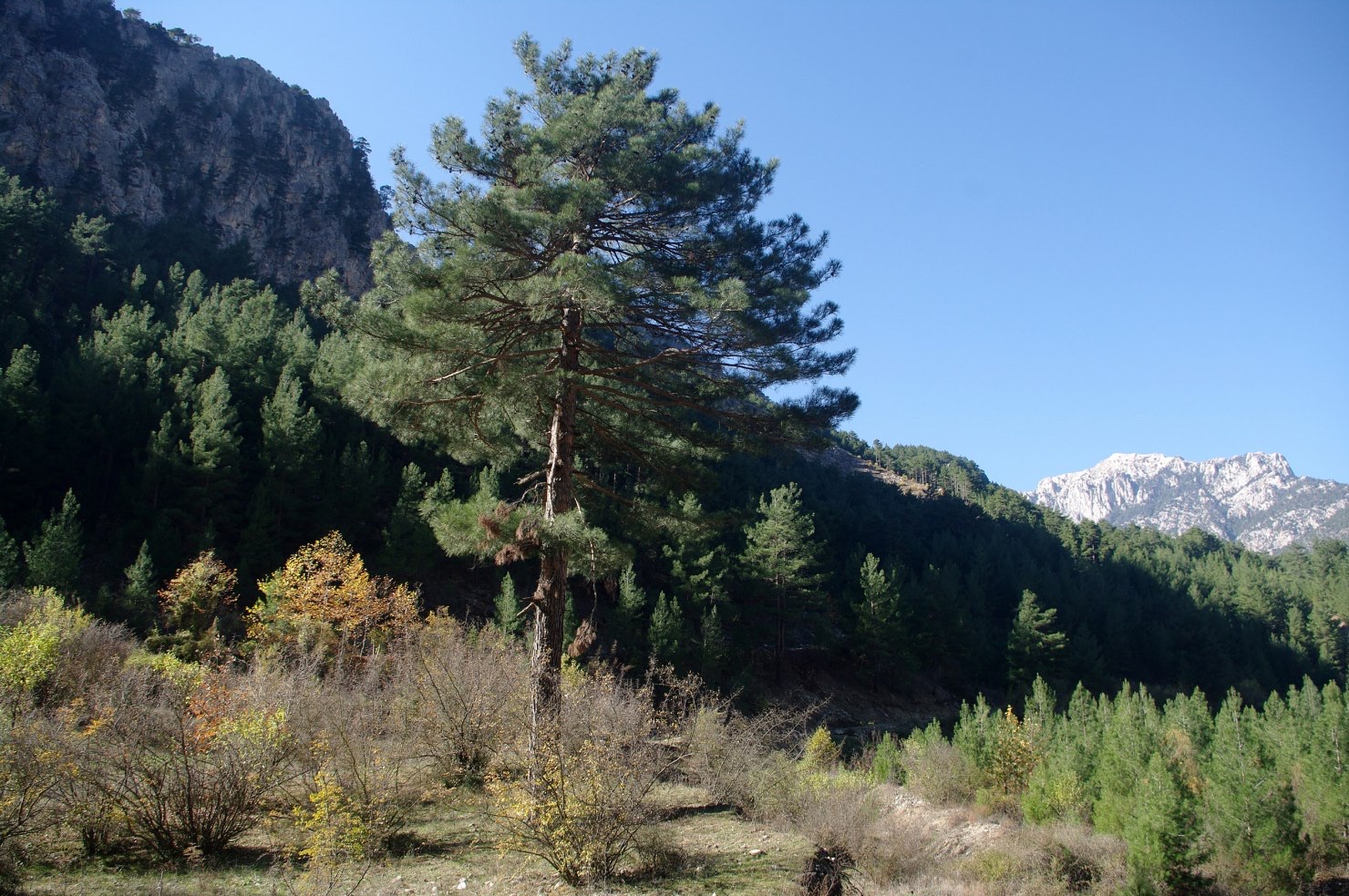
Key Characteristics
- Scientific name: Pinus brutia
- Family: Pinaceae
- Average height: Typically 20–30 meters, although some trees may reach approximately 40 meters
- Trunk diameter: Commonly 60–80 centimeters
- Lifespan: Approximately 150–200 years
- Needles: Stiff and pointed, generally 10–18 centimeters long
- Cones: Usually 6–12 centimeters long, initially green and turning brown as they mature
- Preferred soils: Able to grow in sandy, calcareous, rocky, and nutrient-poor soils
- Climate adaptation: Commonly found in areas receiving approximately 500–1,200 millimeters of annual rainfall
The Growth and Reproductive Cycle of Turkish Red Pine
Turkish red pine grows rapidly during its early years and can begin producing cones at around 10 to 15 years of age.
Its cones may remain on the tree for several years and release seeds when environmental conditions become suitable.
The species' ability to regenerate following fire is particularly notable. Some cones may retain seeds and open more readily under hot and dry conditions, allowing seed dispersal into newly opened areas after a disturbance.
Reduced vegetation cover, increased access to sunlight, and lower competition can create suitable conditions for germination after fire.
This regeneration strategy is one of the adaptations that has enabled Turkish red pine to persist across Mediterranean landscapes for generations.
2. Why Is Turkish Red Pine Important for Ecosystem Balance?
Turkish red pine contributes to soil stability, carbon storage, and biodiversity.
As one of the dominant tree species in many Mediterranean forests, it also provides habitat and supports ecological relationships across the wider ecosystem.
Soil Protection and Erosion Control
Turkish red pine forests help stabilize the soil, particularly on sloping terrain.
Their root systems and ground vegetation reduce the movement of soil caused by rain and wind, helping limit erosion.
Supporting Biodiversity
These forests provide food, shelter, breeding grounds, and nesting areas for many species, including:
- birds,
- bees,
- reptiles,
- insects,
- small and medium-sized mammals.
Turkish red pine is also particularly important for pine honey production, which depends on the ecological relationship between pine forests, scale insects, and honeybees.
Carbon Storage
Through photosynthesis, Turkish red pine absorbs carbon dioxide from the atmosphere and stores carbon in its wood, roots, and surrounding soil.
Healthy and resilient forests therefore contribute to natural carbon sinks and support wider climate action.
Through these functions, Turkish red pine acts as an important component of ecological balance across Mediterranean forest ecosystems.

3. Why Is Turkish Red Pine Adapted to Fire-Prone Environments?
Fire has long been part of many Mediterranean landscapes. Turkish red pine is among the species that have developed ecological traits allowing populations to regenerate after certain types of fire.
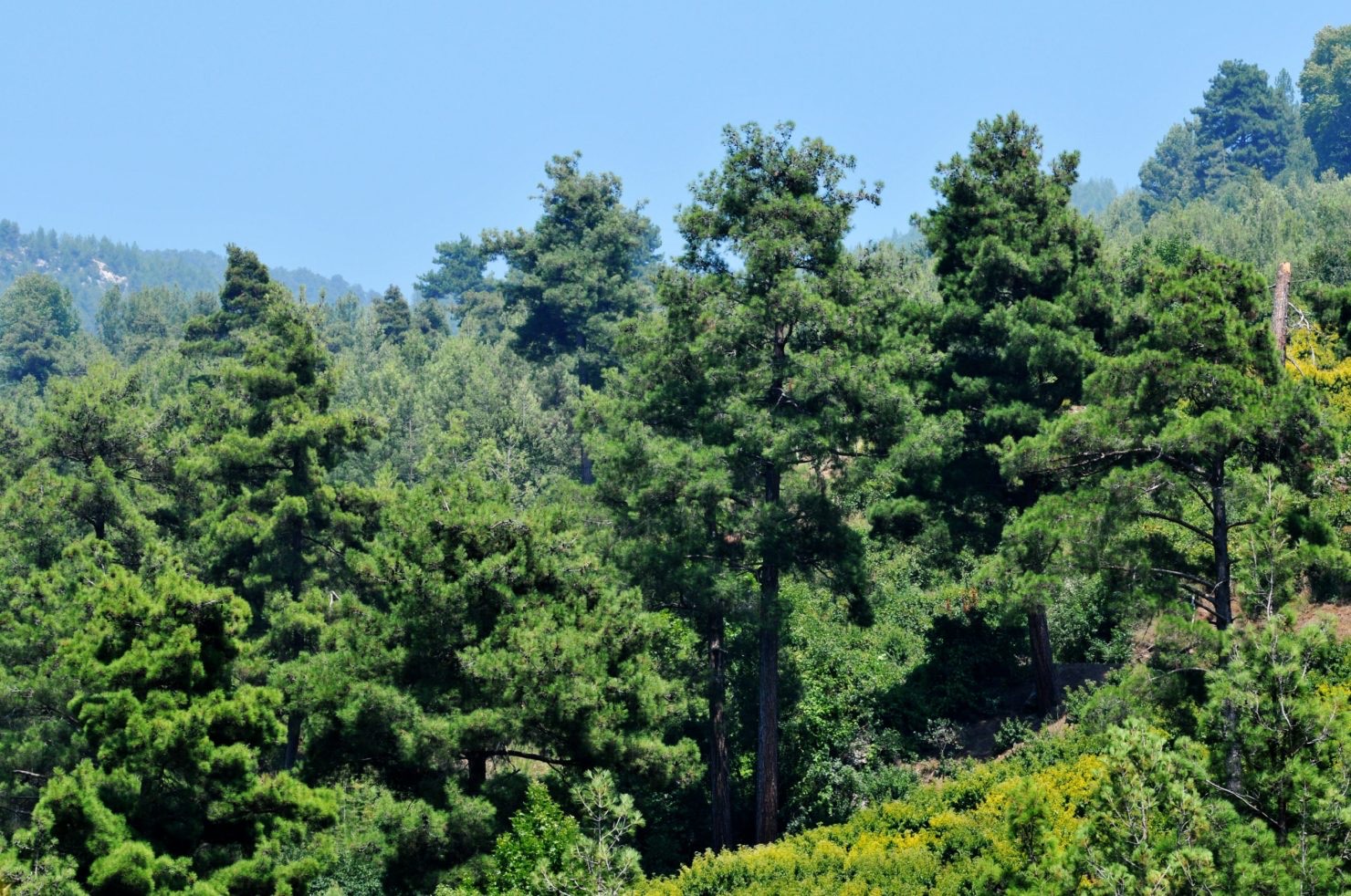
Adaptations That Support Post-Fire Regeneration
Seed-Retaining Cones
Some Turkish red pine cones can remain closed or partially closed on the tree for extended periods.
Heat and dry conditions may encourage them to open and release seeds into the surrounding landscape, including after fire.
This process can support natural regeneration in newly opened areas.
Bark Protection
Older trees may develop relatively thick bark, which can provide limited protection to internal tissues during low-intensity surface fires.
However, this protection is not absolute. Severe or high-intensity fires can still cause extensive tree mortality.
Rapid Early Growth
Turkish red pine seedlings can grow quickly when sunlight, soil conditions, and moisture are suitable.
This allows young trees to establish themselves in open post-fire landscapes where competition from other vegetation has temporarily decreased.
Together, these characteristics help Turkish red pine forests regenerate after some fire events, provided that seed sources remain available and fires do not occur too frequently.
4. How Do Turkish Red Pine Forests Contribute to Climate Action?
Like all healthy forests, Turkish red pine forests absorb carbon dioxide and contribute to the global carbon cycle.
They store carbon in:
- trunks and branches,
- roots,
- forest soils,
- organic matter.
Their relatively rapid growth can support carbon uptake during forest development.
However, the long-term climate value of these forests depends on their protection and ecological health. Severe wildfires, degradation, land-use change, and repeated disturbances can release stored carbon back into the atmosphere.
For this reason, protecting existing forests, supporting natural regeneration, and restoring degraded landscapes are all essential components of climate action.
5. How Is Turkish Red Pine Different from Other Tree Species?
Turkish red pine is distinguished by its adaptation to warm climates, its ability to grow in dry and nutrient-poor soils, and its strong regeneration potential in open landscapes.
Compared with species such as cedar, fir, and black pine, Turkish red pine generally:
- tolerates higher temperatures,
- grows more rapidly at lower and medium elevations,
- performs well in Mediterranean climates,
- spreads effectively through seed,
- establishes itself in dry and exposed areas.
Each tree species has its own ecological requirements. Turkish red pine is particularly well suited to the warm, dry, and fire-prone conditions found across many Mediterranean landscapes.
6. Do Turkish Red Pine Forests Regenerate Only After Fire?
No. Turkish red pine reproduces and spreads naturally without fire.
Its seeds can be dispersed under normal environmental conditions and germinate wherever light, moisture, temperature, and soil conditions are suitable.
Fire can create open areas and trigger seed release from certain cones, making regeneration more visible and sometimes more rapid. However, fire is only one part of the species' wider reproductive cycle.
The timing and frequency of fire are critical.
When fires occur too frequently, seedlings may be destroyed before reaching reproductive maturity. Repeated severe fires can deplete seed sources, damage soils, and prevent forests from recovering naturally.
Human activity and the intensifying effects of the climate crisis can disrupt these ecological cycles by increasing the frequency, intensity, and scale of wildfires.
In areas where natural regeneration is limited, direct seeding and technology-supported dispersal methods such as ecoDrone can help deliver native seeds to suitable restoration sites and support ecosystem recovery.