




Environmental Impact Assessment and Improvement Strategies for Your Company in 10 Steps
Table of Contents
Companies today face growing expectations to understand and manage their environmental responsibilities.
Measuring environmental impact and developing effective reduction strategies have become essential both for protecting natural systems and building long-term business resilience.
In this article, we explain how your company can assess its environmental impact and outline the practical steps it can take to build a more sustainable business model.
What Is Environmental Impact?

Environmental impact refers to the direct and indirect effects an organization creates through its operations, products, services, supply chain, and business processes.
These impacts may result from areas such as:
- energy consumption,
- greenhouse gas emissions,
- water use,
- raw material consumption,
- waste generation,
- transportation,
- land use,
- effects on biodiversity and ecosystems.
In corporate greenhouse gas accounting, emissions are commonly classified into three categories under the GHG Protocol: Scope 1, Scope 2, and Scope 3.
For further information, explore our article: GHG Protocol 101: Why Are Scope 1, Scope 2, and Scope 3 Carbon Emissions Different?
What Is a Corporate Environmental Impact Assessment?
A corporate environmental impact assessment is the process of identifying, measuring, and evaluating the environmental effects associated with a company's activities.
It enables organizations to understand their current environmental performance, identify their most significant impact areas, and develop strategies for improvement.
The primary purpose of the assessment is to create a reliable foundation for:
- setting sustainability targets,
- reducing environmental impact,
- improving resource efficiency,
- managing environmental risks,
- adopting more responsible business practices.
How Is an Environmental Impact Assessment Conducted?

An environmental impact assessment helps companies evaluate how their operations affect the natural environment and where improvement efforts should be prioritized.
The process generally includes five core stages.
1. Collect Comprehensive Data
The first step is to collect reliable data on the environmental impacts generated across the company's operations and value chain.
Relevant data may include:
- electricity and fuel consumption,
- greenhouse gas emissions,
- water consumption,
- raw material use,
- waste generation,
- recycling rates,
- transportation and logistics,
- business travel,
- supplier-related impacts.
The accuracy and consistency of this data directly affect the quality of the assessment.
2. Evaluate Environmental Impacts
The collected data should be analyzed to determine where environmental impacts are concentrated.
This assessment can help the company calculate and understand indicators such as:
- its corporate carbon footprint,
- water footprint,
- energy intensity,
- waste intensity,
- resource consumption,
- effects on biodiversity and ecosystems.
Companies should consider both the scale of each impact and its environmental significance.
3. Identify Priority Areas
Once the company's impacts have been evaluated, the most significant areas should be prioritized.
For example, greenhouse gas emissions from energy consumption may represent the company's most urgent environmental issue. For another organization, water use, packaging waste, logistics, or supply chain emissions may require greater attention.
Prioritization enables companies to direct their resources toward the areas where action can create the greatest environmental and business value.
4. Develop Strategies and Action Plans
Based on the assessment results, the company should establish clear strategies and action plans for reducing its environmental impact.
These may include:
- energy-efficiency projects,
- renewable energy procurement,
- waste prevention,
- sustainable material sourcing,
- water-efficiency measures,
- low-carbon transportation,
- supplier engagement programs.
Each action plan should include measurable targets, responsible teams, timelines, required resources, and performance indicators.
5. Monitor and Report Progress
Environmental performance should be monitored regularly to evaluate whether the implemented strategies are delivering the intended results.
Transparent reporting enables companies to measure progress against their sustainability targets, identify areas requiring further improvement, and communicate their performance to stakeholders.
Environmental impact management should therefore be treated as a continuous process rather than a one-time assessment.
Environmental Impact Reduction Strategies: Building a Sustainable Business Model in 10 Steps
Adopting sustainability principles and reducing environmental impact are increasingly important for meeting the expectations of customers, employees, investors, business partners, and wider society.
The following ten strategies can help companies build a more sustainable and resilient business model.
1. Improve Energy Efficiency
Begin by measuring how and where energy is consumed across offices, facilities, production sites, and other operations.
Companies can reduce energy consumption by:
- using energy-efficient lighting and equipment,
- improving heating and cooling systems,
- insulating buildings,
- introducing automated energy management systems,
- maintaining machinery regularly,
- identifying unnecessary energy use.
Energy-efficiency projects can reduce greenhouse gas emissions while lowering operating costs.
2. Transition to Renewable Energy
Increase the use of renewable energy sources such as solar, wind, geothermal, or responsibly managed hydropower.
Depending on the company's location and operational structure, this transition may involve:
- installing on-site renewable energy systems,
- purchasing electricity from renewable sources,
- entering into power purchase agreements,
- supporting renewable energy projects.
Energy efficiency and renewable energy should be pursued together as part of a wider decarbonization strategy.
3. Strengthen Waste Management
Reduce waste generation by optimizing material use and preventing unnecessary consumption.
Companies can:
- measure waste by type and source,
- establish waste prevention targets,
- introduce clearly labelled recycling systems,
- reuse materials where possible,
- work with licensed waste management partners,
- train employees on correct waste separation,
- improve production and packaging processes.
Waste prevention should take priority over recycling wherever possible.
4. Build a More Sustainable Supply Chain
Evaluate the environmental performance of suppliers and incorporate sustainability criteria into procurement decisions.
Supplier assessments may consider:
- greenhouse gas emissions,
- energy and water use,
- waste management,
- material traceability,
- environmental certifications,
- biodiversity-related risks,
- compliance with environmental standards.
Companies can support their supply chains by setting clear expectations, providing guidance, and collaborating with suppliers on improvement plans.
5. Encourage Low-Carbon Transportation
Evaluate emissions associated with employee commuting, business travel, company vehicles, and logistics.
Organizations can reduce transportation-related impacts by:
- encouraging public transportation,
- supporting cycling and walking,
- offering electric vehicle charging,
- transitioning company fleets to lower-emission alternatives,
- optimizing delivery routes,
- reducing unnecessary business travel,
- adopting remote or hybrid working models where appropriate.
Transportation strategies should be designed according to employees' needs and local infrastructure.
6. Apply Sustainable Product and Packaging Design
Environmental impact can be significantly influenced during the product design stage.
Companies can improve product and packaging design by:
- using recycled or responsibly sourced materials,
- reducing material intensity,
- eliminating unnecessary packaging,
- designing durable and repairable products,
- enabling reuse, refurbishment, or recycling,
- avoiding difficult-to-separate material combinations,
- extending product life cycles.
Life cycle thinking helps companies consider environmental impact from raw material sourcing to end-of-life management.
7. Improve Water Management
Measure water consumption across facilities, production processes, supply chains, and regions experiencing water stress.
Water-management measures may include:
- repairing leaks,
- installing water-efficient equipment,
- reusing process water,
- harvesting rainwater where appropriate,
- improving irrigation systems,
- monitoring water quality,
- setting site-specific reduction targets.
Companies should consider both the volume of water consumed and the local environmental context in which consumption occurs.
8. Educate and Engage Employees
Employees play a critical role in implementing sustainability strategies.
Provide training on environmental priorities and encourage employees to contribute ideas for reducing the organization's impact.
Engagement programs may include:
- sustainability workshops,
- employee challenges,
- internal awareness campaigns,
- volunteering opportunities,
- green teams,
- recognition and reward programs.
Encourage Sustainable Habits with ecoNow
ecoNow helps employees adopt more sustainable lifestyles and reduce their individual carbon footprints through verified environmental actions.
By integrating ecoNow into employee engagement programs, companies can encourage everyday behaviors that support their corporate sustainability goals.
ecoNow enables organizations to make climate action more accessible, measurable, and engaging for their teams.
Learn more about ecoNow.
9. Support Environmental and Social Impact Projects
Participate in local environmental initiatives and develop projects that contribute to nature conservation, ecosystem restoration, and sustainable community development.
Companies can support:
- ecosystem restoration,
- biodiversity conservation,
- environmental education,
- waste reduction,
- community resilience,
- climate action programs.
Integrate Environmental Impact into Your Business with ecoDrone
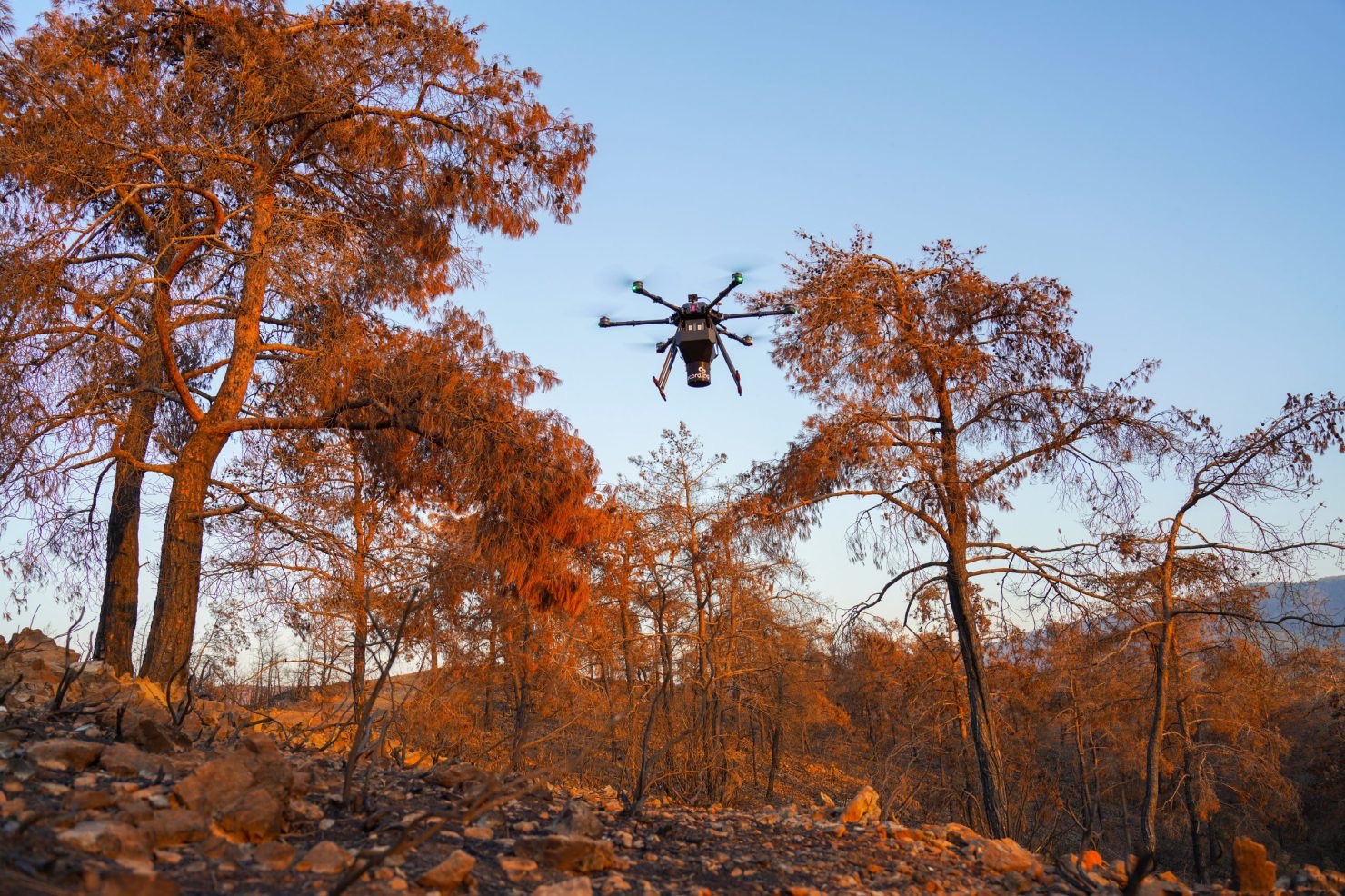
Companies can integrate their products, services, or transactions with ecoDrone, ecording's unmanned aerial ecosystem restoration technology.
Through ecoDrone partnerships, seeds and seed balls are delivered to priority restoration areas, particularly landscapes that are difficult to access using conventional methods.
This model enables brands to connect business activity with measurable contributions to ecosystem restoration and biodiversity.
10. Invest in Environmental Technology, Innovation, and Transparent Reporting
Adopt technologies that can improve operational efficiency and reduce environmental impact.
Companies can invest in research and development projects involving:
- clean technologies,
- artificial intelligence,
- resource-efficient production,
- environmental monitoring,
- low-carbon materials,
- circular business models.
Environmental performance should also be monitored and reported transparently.
Set measurable targets and share progress with stakeholders through relevant sustainability reports, corporate disclosures, and communication channels.
Reporting should include both achievements and areas requiring further improvement.
Turning Environmental Assessment into Continuous Improvement
Integrating these strategies can help companies reduce their environmental impact while building a more sustainable and resilient business model.
A structured approach can also enable organizations to:
- manage environmental risks,
- improve operational efficiency,
- prepare for regulatory requirements,
- strengthen stakeholder trust,
- support customer loyalty,
- create long-term competitive value.
Meaningful environmental progress begins with accurate measurement, continues through clearly defined action plans, and is strengthened through regular monitoring and transparent communication.
By treating sustainability as an ongoing business priority, companies can improve their environmental performance while contributing to a more resilient future.